
"Brazil coffee drought"
500 article(s) found
Introduction of coffee producing countries
Brazil Santos coffee: produced in South America, Brazil, the output accounts for 35% of the world's first in the world, is an Arab shelf variety, famous for Santos export port, good quality, mild taste, moderate bitterness, soft flavor, is indispensable for the preparation of coffee. Jamaican Blue Mountain Coffee: it is found in the Blue Mountains of Jamaica in the Caribbean, but it can only be called Blue Mountain if it comes from a mountain of 5000 meters.

Brazil has suffered another "natural disaster", and the world's largest coffee exporter has to import coffee beans.
Abstract: Brazilian Agriculture Minister Blairo Maggi2 said on the 20th that the Brazilian government plans to allow the import of robusta coffee beans from Vietnam. The decision sparked protests from coffee growers. On February 21st a spokesman for the state of Espiritu Santo said it had put forward a proposal to block the government's move in the Senate. The state has mobilized other coffee-producing areas to protest the decision

Brazilian coffee beans characteristics are the reason why Brazilian coffee beans use less washing treatment
Professional coffee knowledge exchange More coffee bean information Please pay attention to coffee workshop (Weixin Official Accounts cafe_style) Why do Brazilian coffee beans use less washing treatment? Brazilian coffee beans are grown from large farms on the flat ground at an altitude of 850 m to small farms harvested in mountainous areas. Depending on the climate and humidity conditions, the farm chooses sun, semi-sun or

In the past two years, the output of Indonesian coffee has declined due to bad weather.
For professional baristas, please follow the coffee workshop (official Wechat account cafe_style). China's coffee exports declined at the beginning of this year. Farmers have a small supply of coffee because the output is not up to target. This is due to the very bad weather in the coffee center in the past two years. If drought or ElNino occurs in coffee centers in 2015, Lani occurs in coffee plantations in 2016.
The three main types of coffee
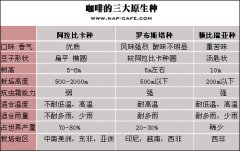
In terms of coffee varieties, there are three main ones: Arabica, Robusta, and Liberia Liberica. The first two are more common, while the latter hardly circulates on the market and is traded only internally in some West African countries. Arabica is mostly produced in Brazil, Colombia, Guatemala, Jamaica, Mexico and other American countries, Costa Rica in the Caribbean Sea,

How do you drink Brazilian coffee? The Brazilian way of handling coffee. Why doesn't Brazil use washing treatment?
Professional coffee knowledge exchange more coffee bean information Please pay attention to Coffee Workshop (Wechat official account cafe_style) as the world's largest coffee producer, Brazil has a world-leading coffee picking and processing technology, which of course has something to do with the level of mechanization and intensive production of the Brazilian coffee industry. Different from the picking methods of other countries, Brazilian coffee is picked first.

In 2022, Brazil's Arabica coffee production will lose about 4% due to frost.
Journalist, coffee analyst and agricultural liaison coordinator Maja Wallengren reports in STIR Tea Coffee, the world's leading tea and coffee industry magazine, that frost affects areas so widely in Brazil's coffee-growing regions that it accounts for 65% of Brazil's total harvest during the average crop cycle. STIR Tea Coffee gets exclusive information from senior Brazilian government officials

Introduction to the regional treatment method of coffee bean flavor description, grinding scale and variety production in the state of Bahia, Brazil
Introduction to the regional treatment method of coffee bean flavor description, grinding scale and production in Bahia, Brazil. The traditional industries in Bahia include clothing, footwear and brewing. Since the establishment of the petroleum industry in the 1980s, the chemical industry and automobile manufacturing industry have developed one after another, especially the establishment of various industrial parks and the implementation of incentive policies to attract foreign investment, which has attracted a large number of foreign enterprises.

The three native species of coffee
The three main native species of coffee are coffee varieties: Arabica Arabica, Robusta Robusta, and Liberia Liberica. The first two are relatively long-term, while the latter is hardly in circulation on the market and is only traded within parts of West African countries. Arabica is mainly produced in Brazil, Colombia, Guatemala, Jamaica, Mexico and other American countries, the Caribbean Sea.

Flavor description of Katim Coffee beans introduction of Variety treatment Manor in Grinding scale production area
Katim coffee beans flavor description grinding scale production area variety treatment manor introduction Arabica coffee trees are not easy to grow, many on high-altitude slopes, picking also needs to be carried out manually. But it is better to have a balanced taste and less caffeine. Robasta is relatively easy to plant. It is resistant to heat, cold, moisture, drought and tolerance.
Coffee bean growing situation in Brazil coffee bean producing area
Following caf é (Wechat official account vdailycom) found that Beautiful Cafe opened a small shop of its own in Brazil. In terms of natural conditions, Brazil is located in the tropics, the north is a tropical rain forest climate, hot and humid all the year round, suitable for tropical crops, coffee tree is a sunny crop, sufficient sunlight for its growth conditions. The decline in coffee production in Brazil has directly pushed up coffee beans in the international market.
November Robusta coffee futures climbed 21 U.S. dollars, or 1 percent, to close at 2048 U.S. dollars per ton.
Gold investment futures on August 28th, London International Financial Futures Exchange (LIFFE)-November Robusta coffee futures climbed 21 US dollars, or 1%, to close at 2048 US dollars per ton. Arabica coffee futures rose above $2 on Wednesday, extending the previous day's rally on concerns about production in Brazil, the largest producer of coffee beans. Cocoa futures fell after rising sharply in the first minute of trading, hitting
In the Brazilian heat wave, the coffee market burns in the trees.
The farmers can't break through the weather now. While cold attacks threaten winter crops in the United States, scorching temperatures are endangering record prospects for Brazil's coffee harvest. The usually sturdy robusta beans-used for instant coffee and espresso-are even roasted before unheated heating in Holy Spirit and Bahia. According to the data of adding weather, the highest atmosphere of the month

Introduction to the characteristics of the manor producing area with a long aftertaste of Brazilian boutique coffee beans
Brazil is known as the kingdom of coffee. It is the largest coffee producer and exporter in the world. The output value of coffee accounts for more than 30% of the world's output value. 1% of the coffee in the world is produced here. Brazil is also the second largest coffee consumer in the world after the United States. About 300000 farmers here are engaged in the coffee industry. It not only carries the important task of Brazil's economic development, but also affects the world.

Description of flavor of Brazilian Bahia coffee beans introduction of manor varieties in planting environment with grinding scale powder
Brazilian coffee flavor Brazilian coffee, generally refers to coffee produced in Brazil. There are many kinds of Brazilian coffee, and like other Arabica coffee, Brazilian coffee is called Brazils to distinguish it from Milds coffee. The vast majority of Brazilian coffee is unwashed and sun-dried and is classified according to the name of the state of origin and port of transport. Brazil has 27 states and 17 states produce coffee, but 4 of them

Coffee bean futures hit the biggest increase in a single day for half a year this year may be in short supply
Coffee beans have been falling all the way this year, due to rain in Brazil, but yesterday (16) ICE Arabica coffee beans fell 6.4% to 138.05 cents per pound, the biggest single-day decline since October last year. According to the report of "MarketWatch", the coffee bean season has been down for six consecutive months, but only in February.

Distribution of Arabica beans Arabica beans buy coffee beans Arabica beans
Arabica coffee is generally thought to originate from the Ethiopian plateau and is widely distributed in the tropics, mainly in Kenya and Ethiopia in Africa, outside Argentina and Brazil in South America, Laos and India in Central America and Asia. Its planting area is the broadest, but the planting conditions are very strict compared with the Robusta species.

Introduction to Santa Ana Volcano area of Salvadoran Coffee Manor with Water washing and Solar treatment
Salvador (So Salvador da Baa de Todos os Santos, meaning San Salvador on Halloween Bay) is a coastal city in northeastern Brazil and the capital of Bahia state. El Salvador was called Bahia directly for a long time, and it was marked as Bahia in many books and maps before the middle of the 20th century (for example, Robinson Drift by Daniel Difoe).

Brazilian coffee farmers demand renegotiation
Professional coffee knowledge exchange More coffee bean information Please pay attention to coffee workshop (Weixin Official Accounts cafe_style) As we all know, Brazil is the world's largest coffee producer, its output is twice to three times that of Colombia, the world's second largest producer. Brazilian coffee has a significant impact on coffee prices. Two frosts in 1994 led to a decline in Brazilian coffee production, causing global coffee

World boutique coffee 5 things you should know about Brazilian boutique coffee
Brazilian coffee has a bad reputation. Quantity is greater than quality, you may hear people say. But there are a lot more beans than most people think. So, as Qianjie Coffee, I'm here to share with you five things you should know about coffee in this country. Some of them may surprise you. The world's largest producer. We're not talking about the country here.